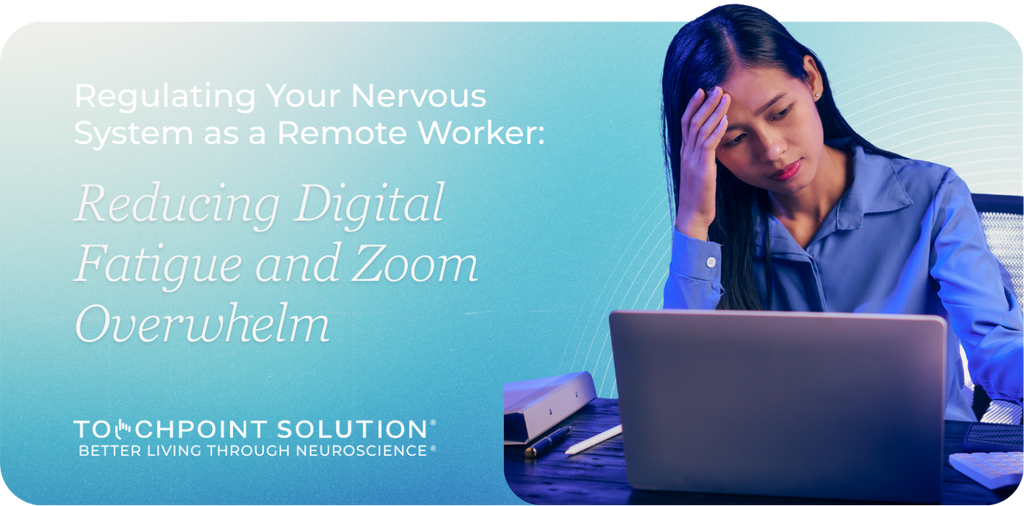
Regulating Your Nervous System as a Remote Worker: Reducing Digital Fatigue and Zoom Overwhelm
Remote work gives many of us more flexibility, but it can also invite a kind of exhaustion that’s hard to name. Constant screen time, stacked virtual meetings, and the pressure to stay “on” can blur together until your body feels wired and tired at the same time. If your focus fades more quickly, emotions sit closer to the surface, or your energy drops by midday, you’re not alone. Many remote workers experience digital fatigue and Zoom overwhelm without realizing how much their nervous system is carrying.
Understanding why these reactions happen—and how small shifts, supported by science-backed tools like TouchPoints™, can help reset the nervous system—can make the workday feel calmer, steadier, and more sustainable.
Why Remote Work Creates Digital Fatigue & Emotional Overwhelm
When we spend the workday almost entirely on screens, our brains process more signals than in typical in-person interactions. Video meetings demand sustained attention, continuous eye contact, and constant interpretation of facial cues—all in a flattened, unnatural communication format. This is one reason many people now talk about digital fatigue and Zoom fatigue as very real workday stressors.
Research from Stanford University’s Virtual Human Interaction Lab shows that features of video conferencing—such as prolonged close-up eye contact, reduced nonverbal cues, and the need to interpret and respond without the usual body language of in-person conversation—make virtual meetings more mentally demanding than face-to-face ones. These dynamics are linked to higher feelings of exhaustion after video calls and can contribute to drained focus and harder transitions between tasks.
Underneath these mental shifts, your nervous system responds too. Small, continual stress signals—notifications, back-to-back meetings, multitasking—activate a low-grade fight-or-flight response. Without deliberate rest cycles, the body doesn’t fully settle, and the result can create a lingering feeling of tiredness long after the last call ends.
How Digital Fatigue Affects the Nervous System
Your nervous system constantly scans for cues of safety or stress. When meetings stack up or the day becomes mentally crowded, the body interprets this overload as pressure. Over time, this can disrupt emotional regulation and make it harder to improve focus at work or feel grounded in moments of tension.
This is where the principle of a nervous system reset becomes important. The body can shift out of stress mode when given cues that signal calm—regular microbreaks, mindful pauses, environmental changes, or soothing sensory input. Even a few seconds of intentional resetting can help restore clarity and support healthier thinking, which anchors our ability to stay present and productive.
Gentle Ways to Reset Your Nervous System During the Workday
Here are supportive, accessible practices you can weave into remote work routines:
1. Build small pauses between tasks
A moment to breathe, stretch, or close your eyes can begin lowering the physiological stress response. These short resets prevent stress from compounding throughout the day.
2. Introduce “screen boundaries”
Stepping away between meetings, turning off self-view, or shifting to phone calls when possible can ease the sensory load that contributes to Zoom fatigue.
3. Create transitions that soothe your system
Light movement, grounding exercises, or stepping outside can gently regulate your nervous system and support ongoing emotional steadiness.
4. Lean into mindful practices that anchor clarity
Mindfulness can help rebuild focus after mental overload. A few slow breaths before opening a new project signal your body that it's safe, helping calm background tension.
Daily mindfulness prompts, like those in our TouchPoint Mindfulness Calendars, can support these grounding moments by offering gentle cues to pause, reset, and refocus throughout the day.
For more ways to bring balance into a demanding workday, this piece on working smarter and finding steadier focus throughout the year offers additional guidance through work-life rhythms rooted in healthier thinking.
How TouchPoints Support Regulation During Digital Fatigue
TouchPoints use BLAST (Bi-Lateral Alternating Stimulation Tactile) technology—gentle, alternating micro-vibrations that help calm the body’s stress response. According to the science behind TouchPoints, this type of stimulation reduces stress within seconds by signaling the nervous system to settle, helping interrupt patterns that keep you stuck in overwhelm.
For remote workers, this can be especially supportive during moments such as:
- pre-meeting anxiety
- difficulty transitioning between tasks
- mid-afternoon emotional fatigue
- feeling scattered or unfocused after hours of screen time
Many people use TouchPoints as a grounding tool during virtual meetings or when working on mentally demanding tasks. They’re discreet, easy to wear, and supportive of the body’s natural ability to find calm again.
You can learn more about how nervous system patterns shift with stress in this foundational look at the frequency of calm and how it helps the body reset.
A Real-Life Example: Finding Focus After Overwhelm
In the case study Boosting Focus & Calm at Work with TouchPoints™, one user shared that workplace stress left them feeling emotionally overwhelmed and unable to concentrate. After incorporating TouchPoints into their workday, they noticed a quick easing of tension and a steadier sense of focus—allowing them to move through tasks with more clarity and confidence.
Their experience mirrors what many remote workers feel: the moment stress softens, mental fog lifts, and work becomes more manageable.
For those balancing work and study, another user found daily grounding and emotional steadiness with TouchPoints in both professional and academic environments—a helpful reminder that support matters wherever overwhelm shows up.
Finding Your Way Back to Calm
If remote work has left you feeling overstimulated or emotionally stretched, there is nothing wrong with you. Your nervous system is simply asking for gentler rhythms and more moments of calm. With small resets, supportive tools, and mindful awareness, you can rebuild focus without pushing through fatigue.
Ready to create calmer moments in your day?
Explore TouchPoints™ and discover steady relief that fits into real life.
-
Posted in
Health, Productivity, Stress